Red meat production and the dairy industry are attracting increasing amounts of negative publicity due to their environmental and ethical impacts. To acknowledge this fact here are a few examples of our efforts to minimise the environmental impact of our beef production;
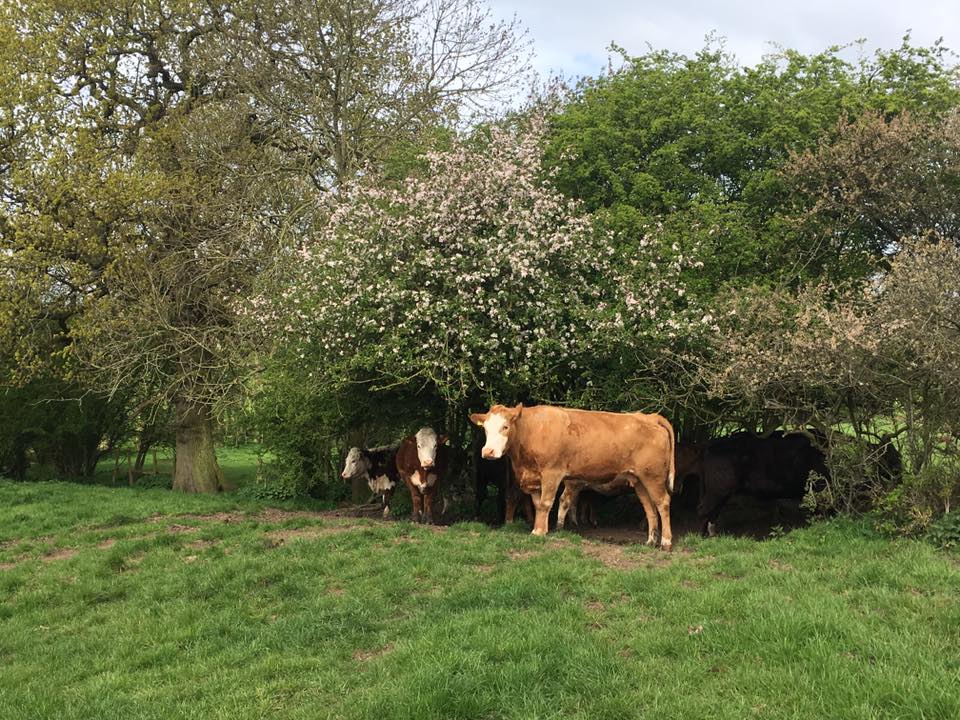
At Broomhill we are part of the Environmental Stewardship scheme. Our system is entirely grass land based and this is important for several reasons. Permanent pasture captures carbon from the atmosphere and stores it in the soil (50 acres of permanent pasture like ours would store over 100 tonnes of fixed carbon). We rarely need to plough the land, this keeps the carbon captured and reduces our fossil fuel consumption, whilst preventing soil erosion and reducing water runoff and flood risk. Farming a predominantly permanent pasture based system largely eliminates the need for environmentally damaging sprays, insecticides and herbicides. This is vital for the protection of insects, the foundation of our food chain, as well as protecting human health.
Antibiotic resistance is another serious issue that we are tackling in our own little way at Broomhill. We have never, and will never use antibiotics in a routine manner. We only use them in a targeted way when an animal falls ill. A lot of money has been made by selling antibiotics, of all types, to the point of excess. As an industry we are becoming wiser to the perils of this poor practice.
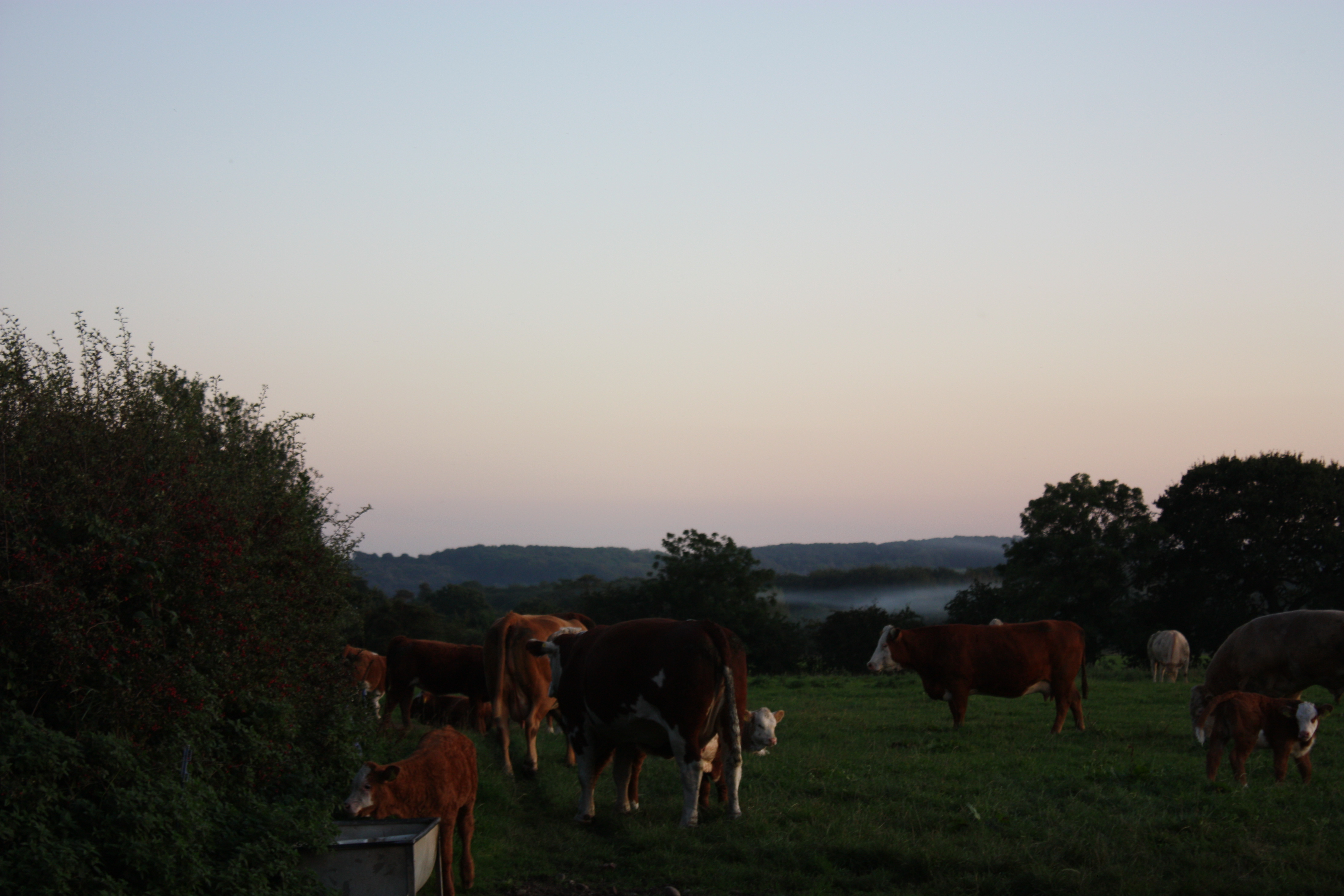
Methane is a gas which is harmful to the atmosphere, and is naturally produced by ruminants during digestion and from their waste. By grazing our cattle at pasture in the summer, and feeding them a dry diet of hay in the winter this virtually eliminates any slurry from being produced, consequently reducing the overall amount of methane produced by our cows.
Water consumption is a criticism often levelled at beef production. At Broomhill our cattle only drink water that naturally arises on our land, from the stream and well. We don’t consume any water from the network.
As far as the weather permits we make hay rather than silage. This is important for several reasons. Silage based systems are able to make the first of several cuts of grass perhaps as early as April by employing artificial fertiliser. This decimates the wildlife that is trying to reproduce in those fields. With hay production you usually only make one cut, much later in July when the majority of the ground nesting birds and other animals have reared their young. Hay production also benefits the flora by allowing pollination and seed production. Baled silage needs a lot of plastic wrap to keep it airtight, which has its own environmental impact.
Perhaps the most important factor is that by rearing and selling our beef direct to local customers we are cutting our food miles and supporting this countries food industry, rather than potentially encouraging South American countries to expand their beef exports through catastrophic deforestation.
If you like delicious beef, you couldn’t buy it any more sustainably sourced from anywhere!
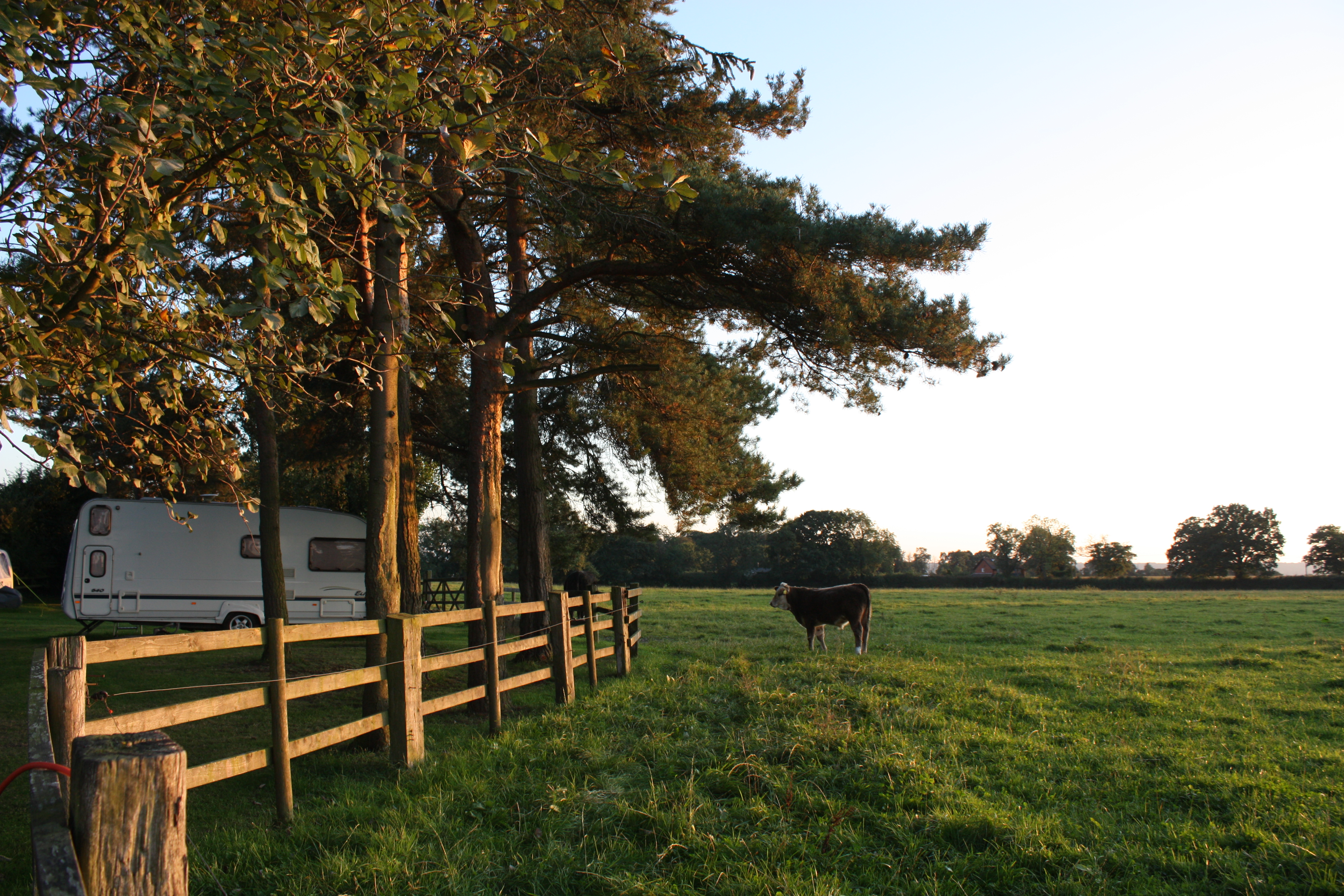
 Broomhill Farm